
ANIMAL DENTAL and ORAL CARE
Dr Gary Wilson
BVSc MVSc MACVSc
Dr Aaron Forsayeth
BVSc MACVSc
Animal Dental and Oral Care
Animal Dental and Oral Care was established in 1995 by Gary Wilson as a referral veterinary dental practice to provide advanced procedures in endodontics, periodontal therapy, orthodontics, restorative dentistry and oral surgery. The practice operates from the Animal Referral Centre (VSS), the Veterinary Teaching Hospital, University of Queensland as well as from several other regional centres.
|
Endodontics
Endodontics is that branch of dentistry dealing with treatments of the dental pulp (the nerves, blood vessels and cells in the root canal).
Types of endodontic treatments performed include root canals (removal of all of the pulp tissue and filling of the canal), vital pulpotomies (pulp capping or sealing of the pulp after exposure such as with height reduction), apicoectomy (surgical root canal therapy) as well as treatments of the immature tooth.
Orthodontics
Bite abnormalities are common in domestic animals. A large percentage of these can be helped with orthodontics although known genetic conditions will NOT be treated (this is often only requested in show animals and should be considered unethical).
Periodontal therapy
Deep periodontal pockets, furcation exposures and mobile (loose) teeth can often be salvaged utilizing periodontal flap surgery and other techniques such as bone augmentation and tooth splinting.
|
Restorative dentistry
Congenital enamel defects, crown fractures and endodontic access preparations can all be restored with a variety of materials. Aesthetic restorations and crowns are very important in show animals that have suffered trauma to the teeth which is affecting their “show” potential.
Oral surgery
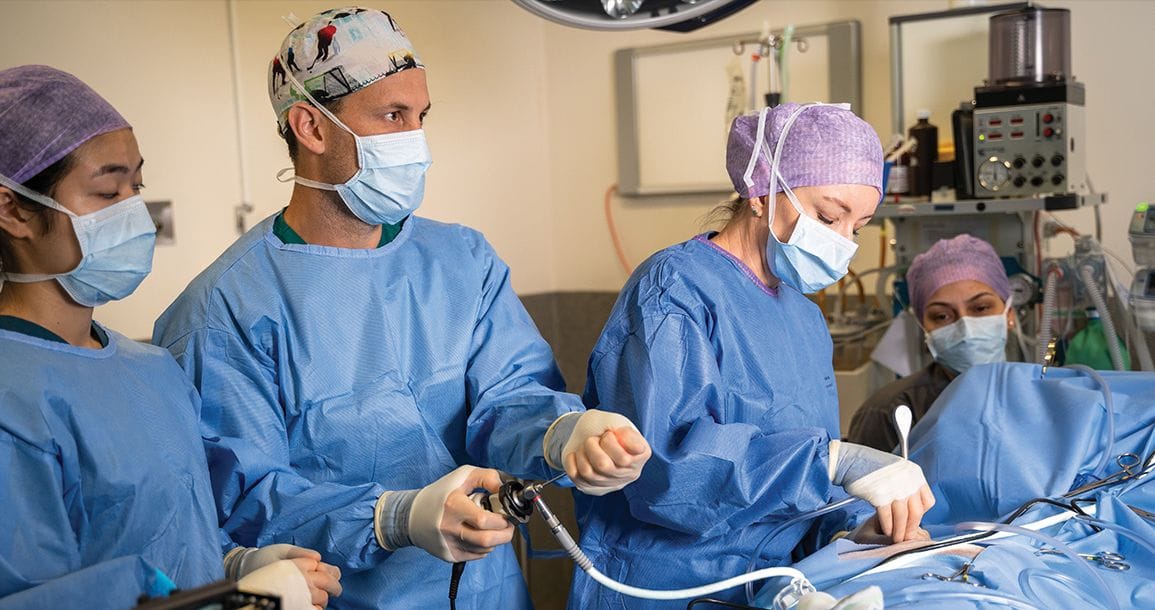
Oral surgery can often be difficult due to access and limited tissue to work with. Correct technique allows repair of cleft palates, oronasal fistulae and oral fractures. Surgery for elongate soft palates reduces owner and patient stress.
Bite evaluation
Bite evaluation is becoming critical in many breeds as certain genetic faults are imported along with the semen (or animal). Many breeds have these bite faults increasing and evaluation of the bite at various ages is an important part of the selection process for future show and breeding animals.
Disarming
This technique has proved very successful in controlling both the behaviour and the damage caused due to interdog aggression (especially the young/old dog problems in the one household). It is also great for working cattle and sheep dogs to reduce “nip” damage. It must be combined with vital pulpotomies to prevent abscessation occurring.