&geometry(278x56) "Veterinary Specialist Services Pty Ltd.")
Apocrine Gland Anal Sac Adenocarcinoma (AGASACA)
 "Apocrine Gland Anal Sac Adenocarcinoma (AGASACA)")
June is Bowel Cancer Awareness Month, and while the focus is naturally on human health, it’s also an important reminder of how vital early detection is across all species. In veterinary medicine, some cancers affecting the gastrointestinal and perineal region can be incredibly subtle in their early stages — including apocrine gland anal sac adenocarcinoma (AGASACA) in dogs. This month offers the perfect opportunity to highlight why thorough examinations and early investigation matter so much for our patients too.
Apocrine Gland Anal Sac Adenocarcinoma (AGASACA)
Some cancers are found the way this tumour often is, that is incidentally. A routine rectal examination at the time of annual vaccination that turns up a small, firm mass in the anal sac. A pre-anaesthetic blood test showing elevated calcium with no immediately obvious explanation. A groomer identifying a lump in the peri-anal region.
Apocrine gland anal sac adenocarcinoma, termed AGASACA, is one of the more common malignancies we see in dogs, and one of the more instructive examples of why a thorough perineal and rectal examination belongs in every workup of middle-aged to older dog. The primary tumour tends to sit quietly in the anal sac, often causing few if any localising signs, until quite large. By the time it is identified, the regional lymph nodes, that is the medial iliac nodes, sitting deep in the back of the abdomen, have also frequently become involved. This is not a cancer that presents late. It is a cancer that presents silently.
The association of AGASACA with hypercalcaemia (elevated blood calcium) is worth knowing about, because the symptoms of hypercalcaemia - namely increased thirst, lethargy and reduced appetite - are clinical signs that do not immediately point toward the back end of a dog. However, it is also important to realise that not all cases of AGASACA are hypercalcaemic.
Treatment, when the staging supports it, typically involves surgical removal of the primary anal sac tumour, along with any affected regional lymph nodes, ideally followed by adjuvant chemotherapy. Mitoxantrone or carboplatin have the most established use in the post-operative setting. Targeted therapy with toceranib phosphate (Palladia®) can contribute meaningfully, particularly for patients with measurable or progressive nodal disease.
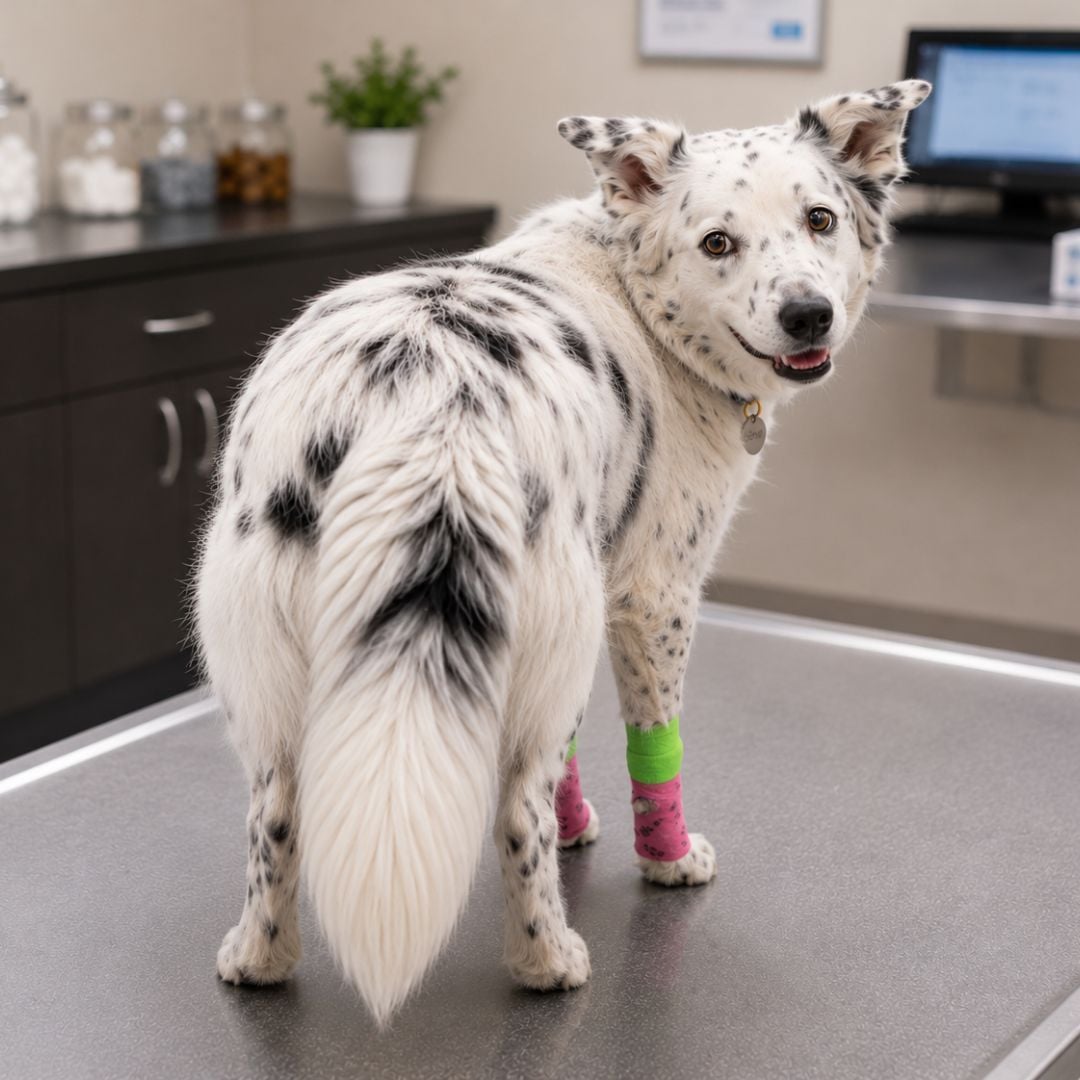
We recently lost a beloved and long-term patient whose case reflects what committed, multimodal treatment can offer, even when the staging is not initially straightforward. Rosie came to us with multiple enlarged iliosacral lymph nodes identified on CT scan; a finding that, for some families, raises the question of whether intensive treatment is genuinely worth pursuing. Her owners understood the situation and chose to proceed. Rosie underwent surgery to remove the primary tumour and the affected lymph nodes, then completed a course of adjuvant mitoxantrone, and eventually ongoing Palladia. Rosie lived close to two years from diagnosis, and for most of that time the cancer was not what limited her quality of life from day to day.
We do not offer such an outcome as a promise. Outcomes with AGASACA are variable, and locoregional nodal involvement does carry a more guarded prognosis. What Rosie's story illustrates is that advanced stage at diagnosis does not automatically mean the treatment window has closed, and a considered approach to staging and multimodal therapy can provide patients meaningful time at home, doing life with the family they love.
If you are managing a dog with hypercalcaemia of uncertain origin, altered defecation habits, or an uncharacterised perianal mass, a thorough rectal examination and early oncology referral will not be wasted time.
| Tags:NewsOncologyPatient Care |