&geometry(278x56) "Veterinary Specialist Services Pty Ltd.")
Tethered Cord Syndrome in Dogs: Symptoms, Diagnosis and Surgical Treatment
 "Tethered Cord Syndrome in Dogs: Symptoms, Diagnosis and Surgical Treatment")
By Dr Abbie Tipler, Specialist Small Animal Surgeon, Veterinary Specialist Services (VSS)
What happens when a dog experiences unexplained pain, hindlimb weakness or unusual behavioural changes, but investigations fail to identify a clear cause?
One possible explanation is tethered cord syndrome, an uncommon and potentially under-recognised spinal cord condition in dogs.
Dr Abbie Tipler, Specialist Small Animal Surgeon at VSS Jindalee, recently investigated two dogs with suspected tethered cord syndrome. Both cases presented diagnostic challenges, eventually leading to surgical exploration.
These cases highlight why this condition deserves greater consideration, particularly when a dog's clinical signs do not fit a more familiar diagnosis.
What is tethered cord syndrome in dogs?
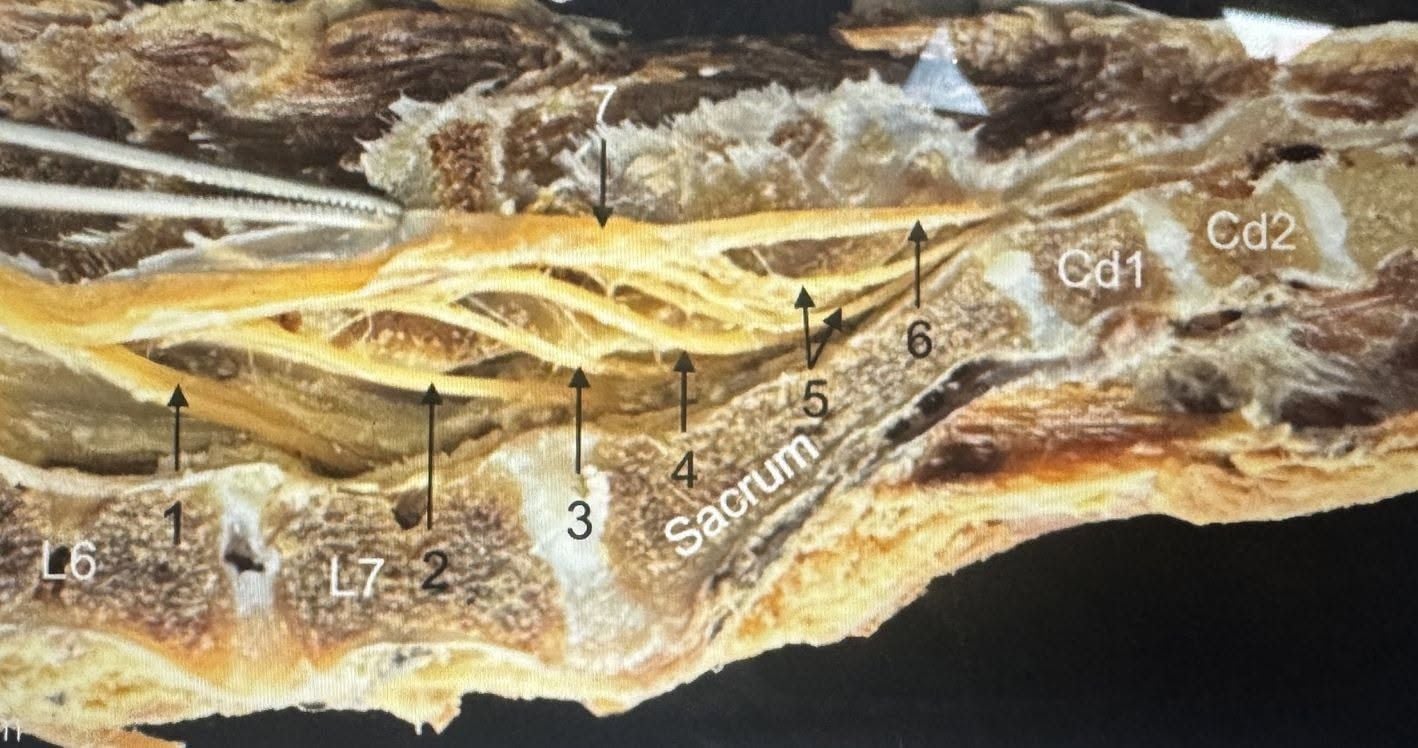
Tethered cord syndrome occurs when the spinal cord is abnormally restricted or placed under tension, limiting its normal movement within the spinal canal.
This restriction can be associated with the filum terminale, a thin structure extending from the end of the spinal cord that helps anchor it.
When this structure is abnormally tight or inelastic, it can place traction on the spinal cord, potentially contributing to pain, neurological problems and changes in movement or behaviour.
Some dogs have identifiable structural abnormalities. Others may have occult tethered cord syndrome, where conventional imaging does not reveal an obvious abnormality despite clinical signs consistent with the condition.
What are the symptoms of tethered cord syndrome in dogs?
One of the difficulties with tethered cord syndrome is the wide range of symptoms. Some may initially appear unrelated to spinal cord disease.
Reported signs include:
Unexplained episodes of pain, sometimes without an obvious cause.
Lower back or lumbosacral pain, particularly when the area is touched or manipulated.
Hindlimb lameness, weakness or stiffness, including an unusual walking pattern.
Neurological deficits, such as changes in paw positioning or awareness.
Tail abnormalities, including reduced tail tone.
Urinary or faecal incontinence.
Pain associated with urination or defecation.
Behavioural changes, including anxiety, aggression or vocalisation when touched.
Excessive licking, chewing or biting at the hindlimbs or tail.
Reluctance to exercise or a noticeable reduction in normal activity.
A 2025 study involving 30 dogs with confirmed or suspected occult tethered cord syndrome found:
97% experienced pain or abnormal sensations affecting the lower back, tail or hindlimbs.
70% had hindlimb gait abnormalities.
67% displayed behavioural changes.
These findings highlight how tethered cord syndrome can present through symptoms that are not immediately recognised as neurological.
However, these signs can have many other causes, and the study was relatively small. They should not be considered diagnostic of tethered cord syndrome on their own.
How is tethered cord syndrome diagnosed in dogs?
Diagnosing tethered cord syndrome can be difficult because conventional MRI scans may appear relatively normal.
Diagnosis generally involves reviewing the dog's clinical history, performing a neurological examination, assessing imaging findings and ruling out other reasonable explanations for the symptoms.
In some cases, dynamic MRI may provide additional information.
Unlike conventional MRI, which captures images with the spine in a particular position, dynamic MRI assesses the spinal cord and surrounding structures in different positions.
This may help identify abnormal restriction of movement that supports a suspected diagnosis.
However, even dynamic MRI is not always definitive. In some patients, despite extensive investigation, the diagnosis remains presumptive.
Where clinical suspicion is high and other reasonable causes have been excluded, surgical exploration may be considered.
Two suspected tethered cord cases at VSS Jindalee
Dr Abbie Tipler recently encountered two dogs with clinical signs suggestive of tethered cord syndrome.
In both cases, investigations had failed to identify another reasonable explanation for their symptoms. One dog also had imaging findings suspicious for the condition.
Given the findings and ongoing clinical concerns, Dr Tipler decided to consider surgical exploration.
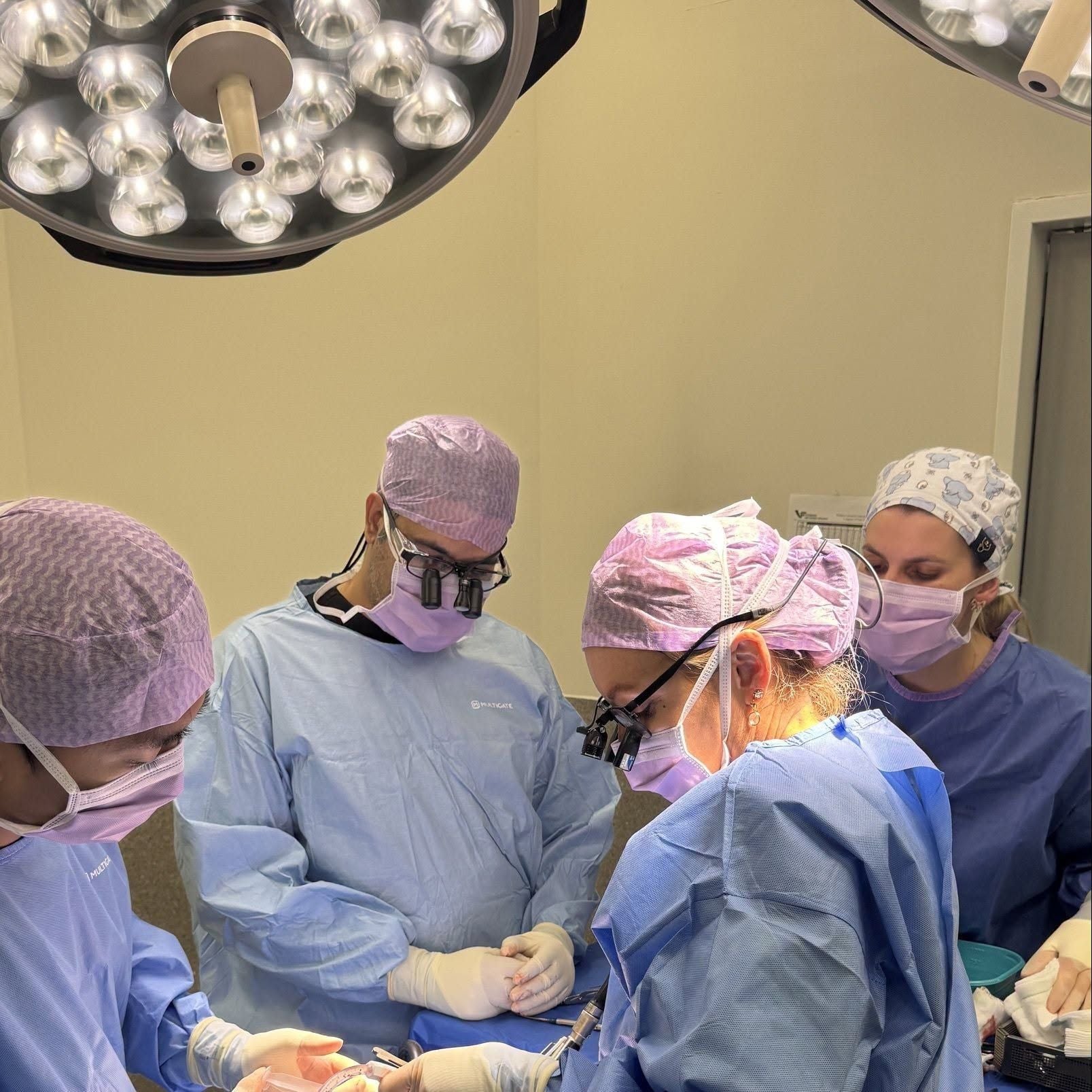
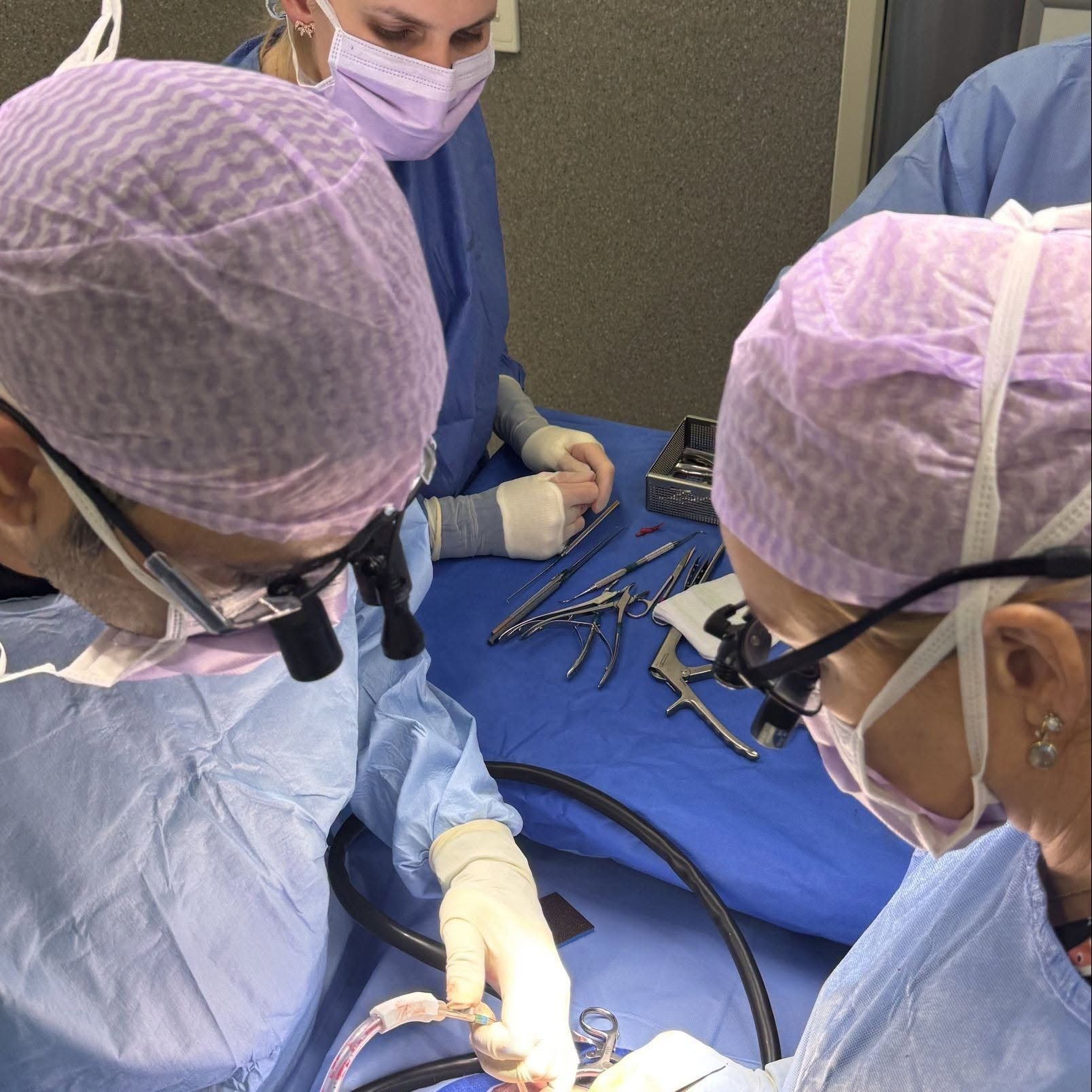
Brisbane neurologist Dillon Devathasan joined Dr Tipler at VSS Jindalee to assist with both procedures, which were scheduled on the same day.

How is tethered cord syndrome treated surgically?
Surgical treatment aims to release the abnormal restriction or tension affecting the spinal cord.
In these two cases, the procedure involved:
Dorsal laminectomy: Accessing the spinal canal to expose the dural sac surrounding the spinal cord.
Durotomy: Carefully opening the dural sac.
Transection of the filum terminale internum: Identifying and dividing the internal portion of the filum terminale.
Transection of the filum terminale externum: Dividing its continuation beyond the dural sac.
Although the anatomical approach is relatively straightforward, the intradural component requires considerable care because of the delicate neurological structures involved.
What does the research say about surgical outcomes?
In the same 2025 study of 30 dogs, 11 underwent surgical treatment.
Five dogs had the filum terminale externum transected alone, while six underwent transection of both the internum and externum.
All six dogs that underwent transection of both structures achieved full recovery without relapse during the reported follow-up.
Overall, seven of the 11 surgically treated dogs achieved full recovery at final follow-up.
These results are encouraging, although the number of dogs was too small to establish whether one surgical technique is superior.
What happened after surgery at VSS Jindalee?
Both procedures went well.
However, the most important question remains: will the dogs' clinical signs improve following surgery?
One of the challenges with this condition is that improvement following surgical release may provide further support for the suspected diagnosis.
At the time of Dr Tipler's initial report, both patients were awaiting further assessment of their clinical response and recovery.
Their progress will help determine whether surgery has resolved the symptoms that originally prompted investigation.
Why tethered cord syndrome deserves greater awareness
For veterinarians, these cases are a reminder to consider tethered cord syndrome when investigating patients with persistent, unexplained pain, neurological abnormalities or behavioural changes that do not fit a more familiar diagnosis.
As Dr Tipler explains:
"I think this diagnosis needs to be on every vet's radar. I suspect it is significantly under-diagnosed in dogs."
For pet owners, unexplained pain, changes in movement or unusual sensitivity should always warrant veterinary assessment, particularly when symptoms persist or worsen.
These signs do not necessarily indicate tethered cord syndrome, but they deserve investigation.
Specialist spinal surgery at VSS Jindalee
Dr Abbie Tipler is a Specialist Small Animal Surgeon at Veterinary Specialist Services (VSS).
These cases highlight the importance of thorough investigation, specialist collaboration and careful surgical decision-making when managing complex spinal conditions.
VSS works alongside referring veterinarians to investigate and manage patients requiring specialist assessment and surgical treatment.
For referring veterinarians: Contact VSS to discuss patients with unexplained spinal pain, hindlimb abnormalities or neurological signs that may warrant further specialist investigation.
For pet owners: If your dog is experiencing unexplained pain or changes in movement or behaviour, speak with your regular veterinarian about further investigation and whether specialist assessment may be appropriate.
Veterinary research referenced
Espinosa Romero J, et al. (2025). Occult tethered cord syndrome: insights into clinical and MRI features, prognostic factors, and treatment outcomes in 30 dogs with confirmed or presumptive diagnosis. Frontiers in Veterinary Science.
De Decker S, Watts V, Neilson DM. (2017). Dynamic Lumbosacral Magnetic Resonance Imaging in a Dog with Tethered Cord Syndrome with a Tight Filum Terminale. Frontiers in Veterinary Science.
| Tags:Most PopularNews |