&geometry(278x56) "Veterinary Specialist Services Pty Ltd.")
Gastric Dilatation-Volvulus (GDV)
 "Gastric Dilatation-Volvulus (GDV)")
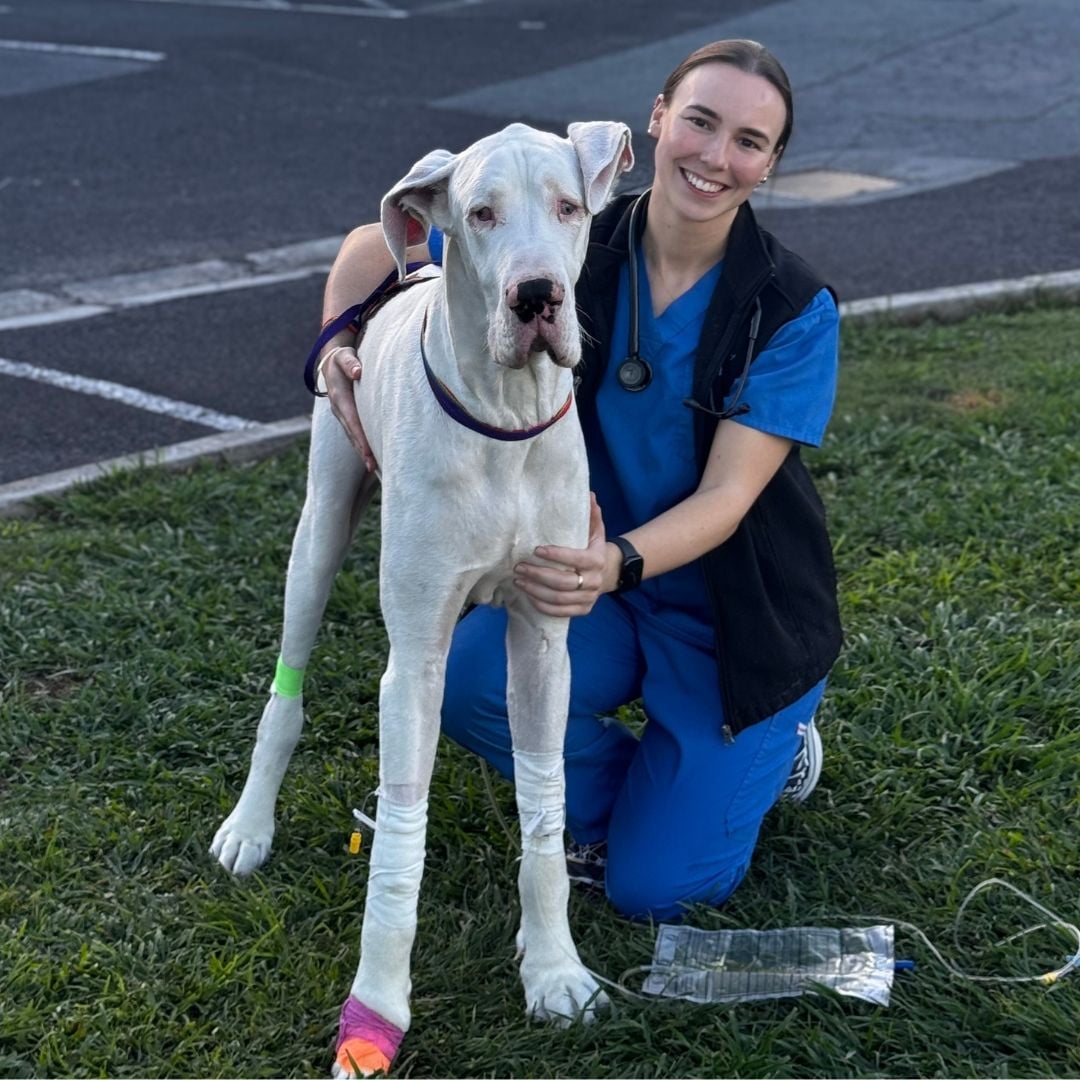
Cruiser's Remarkable Recovery from GDV
Cruiser, a very large, completely deaf, four-year-old Great Dane was brought to the Animal Emergency Service at our Jindalee hospital after developing an acute onset of abdominal distension overnight. His worried family had noticed persistent retching, excessive drooling, panting, obvious abdominal pain and marked restlessness.
On presentation, Cruiser was diagnosed with Gastric Dilatation-Volvulus (GDV), a life-threatening condition in which the stomach becomes severely distended and twists on itself. Due to the urgency of the situation, he was taken straight to emergency surgery, where the GDV was successfully corrected and a gastropexy was performed to help prevent future stomach torsion.
The following day, Cruiser was transferred to Veterinary Specialist Services (VSS) for intensive postoperative care. Although his surgery had gone well, the team remained vigilant due to persistent ventricular arrhythmias - a recognised complication that can occur following GDV correction.
Over the next three nights, Cruiser received around-the-clock monitoring and supportive care. A major focus of his hospitalisation was the management of his ventricular arrhythmias. With careful monitoring and anti-arrhythmic therapy, including a lignocaine constant rate infusion followed by oral flecainide, his heart rhythm gradually stabilised. The lignocaine infusion was successfully discontinued after his third dose of flecainide - an exciting milestone that meant Cruiser was one step closer to going home.
By Day four of hospitalisation, Cruiser had transformed from a critically ill emergency patient into a bright, happy and enthusiastic Great Dane. He was up and about, eager to greet the team and enthusiastically scoffing down his meals. With his arrhythmias controlled, his comfort restored and his recovery progressing beautifully, Cruiser was finally ready to return home to his family.
Fun Fact
Cruiser's deafness quickly made him a favourite among the VSS team. During his stay, many staff members began learning and using hand signals so they could communicate with him more effectively. Before long, Cruiser was confidently responding to his own version of sign language, making rounds and treatment times a little more special for everyone involved. The team favourite was a simple "thumbs up", which Cruiser quickly learned meant "good boy."
His gentle giant nature, resilience and unique way of communicating left a lasting impression on everyone who cared for him, and the team was delighted to see him make such a successful recovery.
Outcome
Successful surgical correction of GDV with gastropexy, resolution of ventricular arrhythmias following anti-arrhythmic therapy and discharge after four days of hospitalisation with an excellent recovery.
What is GDV?
Gastric Dilatation-Volvulus (GDV), commonly known as bloat, is a life-threatening emergency that occurs most often in large, deep-chested breeds such as Great Danes, German Shepherds, Weimaraners and Saint Bernards.
Signs of GDV
Signs of GDV can include:
- Unproductive retching or attempts to vomit
- Sudden abdominal enlargement
- Excessive drooling
- Restlessness or discomfort
- Weakness or collapse.
Reducing the Risk of GDV
To help reduce the risk:
- Feed 2-3 smaller meals daily rather than one large meal
- Use a slow-feeder bowl if your dog eats rapidly
- Avoid vigorous exercise for 1-2 hours before and after meals
- Maintain a healthy body weight
- Minimise major stress where possible.
Early recognition and treatment are critical and can be lifesaving.
| Tags:Emergency/Critical CareGastrointestinalInternal MedicineMost PopularNewsNursingPatient CareSurgery |