Gastric Dilatation-Volvulus (GDV) in Dogs

Reuben's GDV Emergency: How Acting Quickly Made All the Difference
When it comes to Gastric Dilatation-Volvulus (GDV) in pets, every minute counts. Reuben, a 10-year-old German Shepherd, is a wonderful example of just how important early recognition and prompt veterinary intervention can be for dogs with GDV.
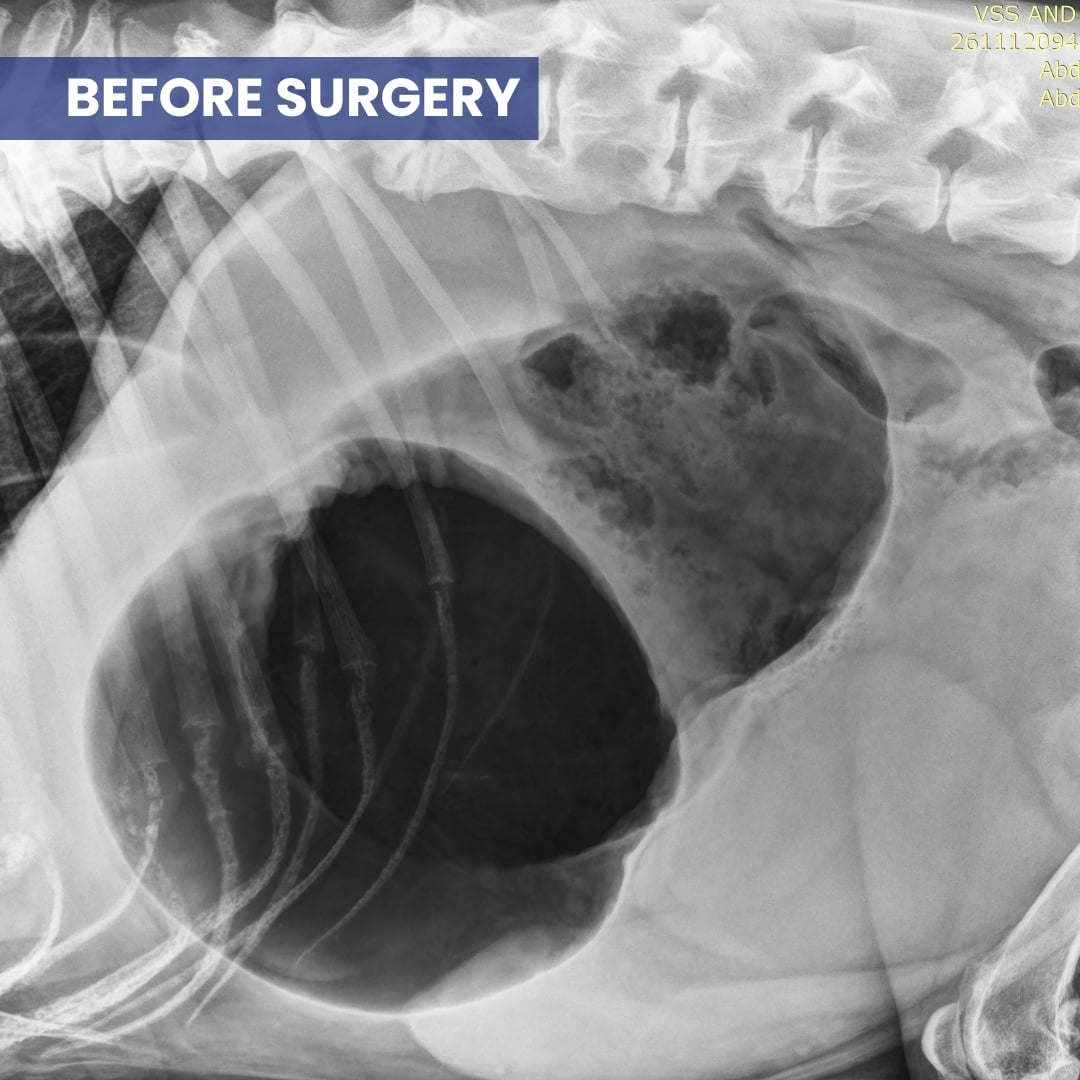
Reuben was rushed to our Jindalee hospital for emergency assessment after his owner noticed the sudden onset of worrying clinical signs including a hard, distended abdomen, frothing at the mouth and repeated attempts to vomit without bringing anything up.
Thankfully, his owner acted quickly and sought emergency veterinary attention within approximately 30 minutes of the signs first appearing.
A Life-threatening Emergency
Following examination, Reuben was diagnosed with Gastric Dilatation-Volvulus (GDV), commonly known as 'bloat'. This is a serious, life-threatening condition in which the stomach becomes distended with gas and twists on itself, compromising blood flow and potentially leading to shock and significant organ damage.
Immediate stabilisation was essential. Our emergency veterinary team performed gastric decompression using needle trocarisation, followed by orogastric intubation to relieve the pressure within his stomach.
Once stabilised, Reuben was taken straight to emergency surgery.
Emergency Surgery and Intensive Care
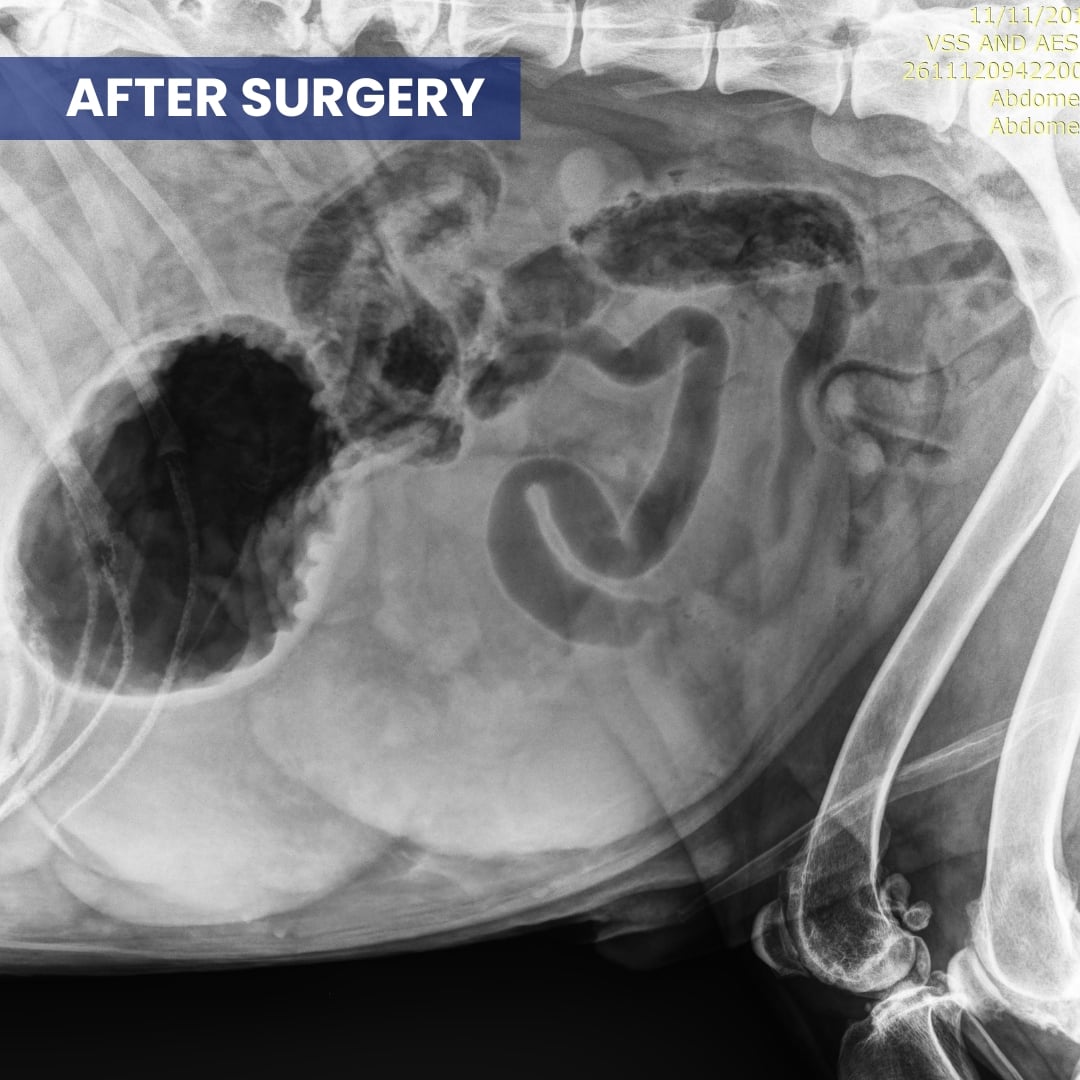
An exploratory laparotomy was performed to correct the gastric volvulus, followed by a gastropexy to help prevent the stomach from twisting again. A splenectomy was also required.
During surgery, 150 mL of blood collected from Reuben's abdomen was processed and returned to him via autotransfusion.
Following surgery, Reuben was closely monitored in hospital, receiving intravenous fluids, pain relief and medications to help manage potential cardiac arrhythmias. These abnormal heart rhythms can occur following GDV, making careful post-operative monitoring particularly important.
Encouragingly, his blood lactate levels improved from 9.4 to 2.2 mmol/L following treatment, indicating a positive response to stabilisation and surgery. It is important to monitor the trend in lactate levels, rather than a single value.
A Happy Outcome for Reuben
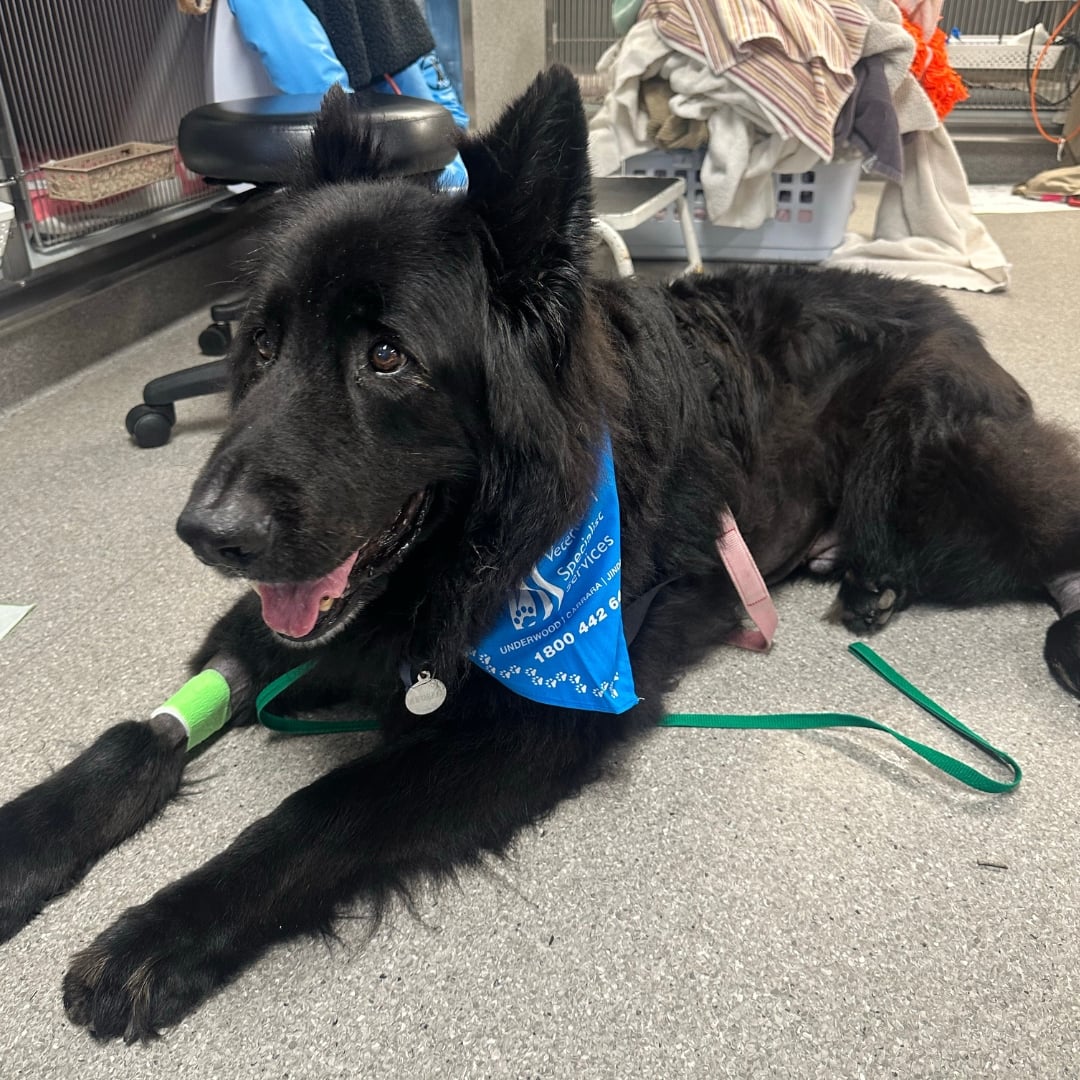
We are delighted to report that Reuben made an excellent recovery and was discharged home the following day without complications.
He is now doing well!
Reuben's story is an important reminder of how quickly GDV can develop in dogs and how critical early intervention can be. His owner's ability to recognise that something was seriously wrong and seek immediate veterinary care meant that Reuben received treatment before his condition progressed further.
Know the Signs of GDV. Act Quickly.
GDV is a true veterinary emergency and can deteriorate rapidly. Signs to watch for include:
- A swollen, firm or distended abdomen
- Repeated attempts to vomit, often producing little or nothing
- Excessive drooling or frothing at the mouth
- Restlessness, discomfort or pacing
- Weakness, collapse or signs of distress.
What Can Increase the Risk of GDV?
While GDV can occur in any dog, it is more commonly seen in large and giant breeds - particularly those with deep, narrow chests, such as German Shepherds, Great Danes and Weimaraners.
Although the exact cause of GDV isn't fully understood, several factors may increase the risk including:
- Having a large or deep-chested body shape
- Eating large meals or eating very quickly
- Swallowing excessive amounts of air while eating or drinking
- Exercising vigorously around mealtimes.
A few simple precautions may help reduce the risk including:
- Avoid feeding large meals immediately before or after exercise
- Allow your dog time to rest and settle after exercise before offering their meal
- Avoid vigorous exercise immediately after eating
- Consider feeding smaller, more frequent meals, rather than one large meal
- Encourage slower eating if your dog tends to gulp their food.
Large, deep-chested dogs can be particularly prone to swallowing air (aerophagia), including when panting after exercise. Giving them time to cool down and settle before eating or drinking large amounts is a sensible precaution.
Remember, these measures cannot guarantee prevention, so knowing the warning signs and acting quickly remains incredibly important. If you notice any of these signs, seek immediate veterinary attention. Do not wait to see if your dog improves.
A huge well done to Reuben's owner for acting so quickly, and to our emergency and surgical teams for their dedication and care.
We are so pleased to see Reuben back home and doing well.
| Tags:Diagnostic TestingEmergency/Critical CareEndocrinologyGastrointestinalInternal MedicineMedicationMost PopularNewsPatient Care |