&geometry(278x56) "Veterinary Specialist Services Pty Ltd.")
How is cancer diagnosed in pets?
 "How is cancer diagnosed in pets?")
How is cancer diagnosed in pets?
The answer is that diagnosing cancer is rarely based on a single test. It is most often a stepwise process, with each test providing another piece of the puzzle. Together, these tests help us understand not only what the tumour is, but also how best to treat it.
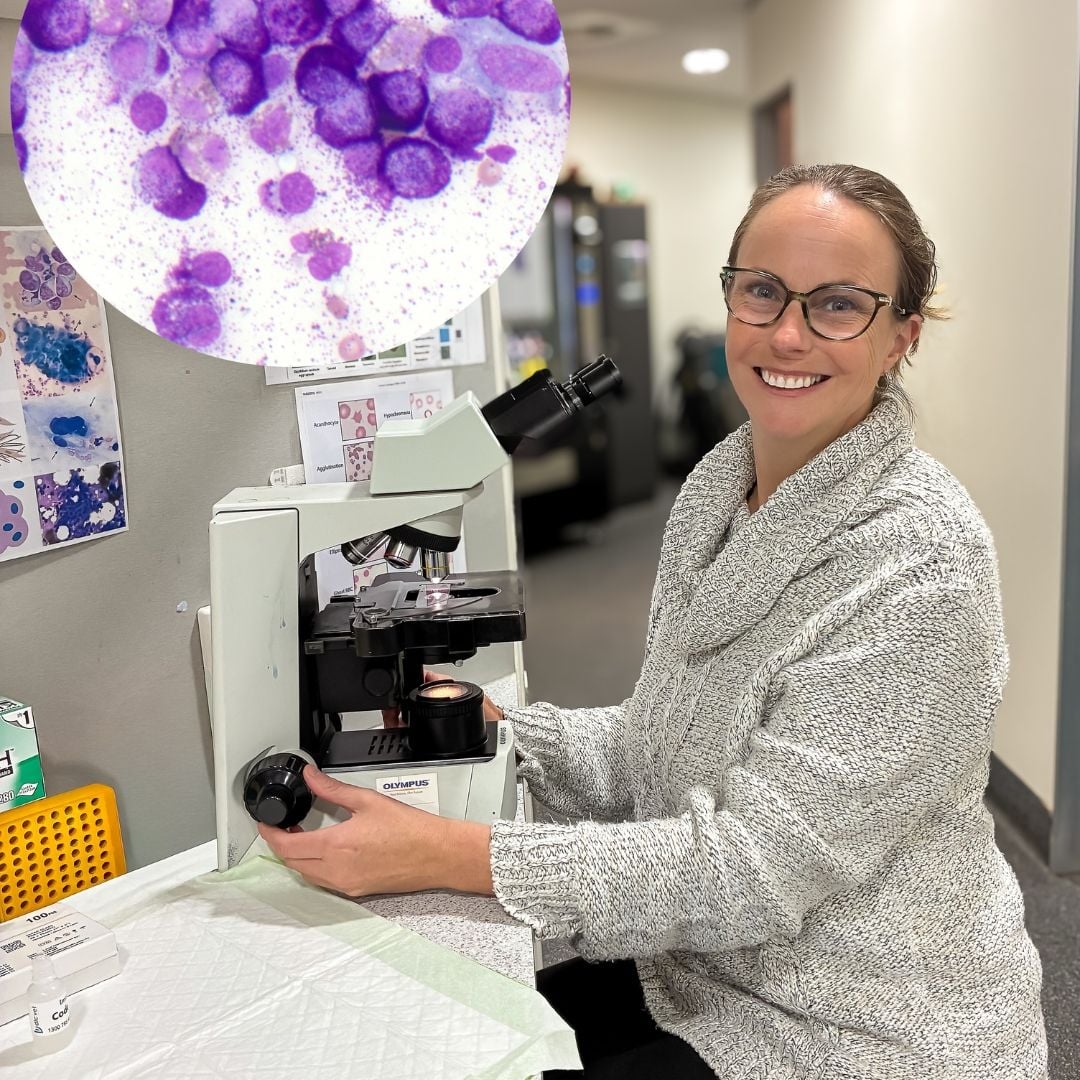
For many lumps and bumps, the first step is a fine needle aspirate (FNA). This involves passing a small needle into the mass to collect a sample of cells, which are then examined under a microscope by a veterinary clinical pathologist. This process is called cytology.
Cytology is quick, minimally invasive and usually well tolerated without sedation. For some cancers - particularly round cell tumours such as lymphoma, mast cell tumours, plasma cell tumours and transmissible venereal tumour - cytology alone can often provide a definitive diagnosis.
However, many tumours cannot be accurately identified by examining individual cells alone. Instead, we need to examine how the cells are arranged within the tissue. This requires a biopsy, in which a small piece of the tumour (or ideally the entire tumour) is removed and examined by a veterinary anatomic pathologist. This process is called histopathology and is considered the for diagnosing many cancers.
Histopathology can often tell us the tumour type, whether it is benign or malignant, how aggressive it appears and, if a tumour has been surgically removed, whether the surgical margins are complete.
Even histopathology, however, does not always provide all the answers. Certain tumours have very similar microscopic appearances, or unusual features, that make classification difficult. In these cases, additional specialised staining techniques, such as immunohistochemistry (IHC), may be required to determine exactly what type of cancer is present.
Additionally, a diagnosis alone is not always enough to decide the best treatment for an individual patient, or to provide a reasonable expectation of their outcome. We also need to know whether the cancer has spread. This process is called staging and may involve imaging, such as x-rays, ultrasound or CT, together with additional sampling of lymph nodes, or other tissues, to determine the extent of disease.
Finally, treatment recommendations are never based on the cancer alone. We also consider your pet's overall health, any other medical conditions, expected quality of life and your family's goals, practical circumstances and wishes. The best treatment for one patient may not be the best treatment for another - even when they have the same diagnosis.
Cancer diagnosis is therefore much more than simply putting a name to a tumour. It is about gathering all the information needed to make informed, individualised decisions that provide the best possible care for both the patient and their family.
| Tags:Diagnostic TestingHaematologyInternal MedicineMost PopularNewsOncologyPatient Care |