&geometry(278x56) "Veterinary Specialist Services Pty Ltd.")
Why Cancer Staging Matters
 "Why Cancer Staging Matters")
Why Cancer Staging Matters: Understanding the Full Picture Before Treatment
When a diagnosis of cancer is reached, it is natural to want to know what comes next.
What are the treatment options? Can it be treated? What is the prognosis? How much time might we have?
Our job as veterinary oncologists is to help answer those questions. But sometimes, before we can answer them properly, we need to understand not just what type of cancer it is, but where it is.
This is where staging comes in.
Cancer staging is the process of determining the extent of disease within the patient's body. Depending on the type of cancer, this might involve assessing the original tumour, including its size and invasiveness, checking nearby lymph nodes and looking for evidence that the cancer has spread to other organs, such as the lungs, liver, spleen or bones.
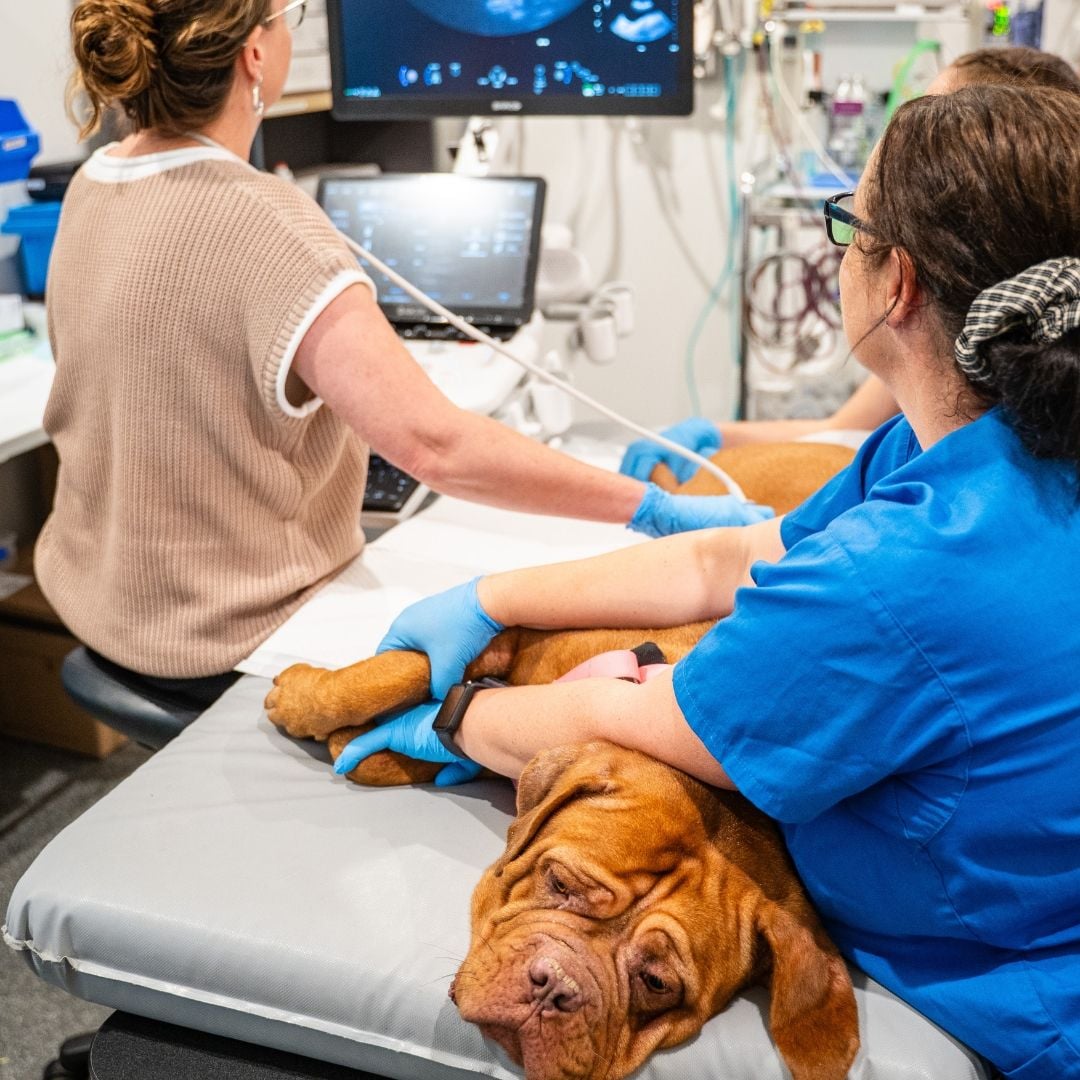
Staging tests might include chest x-rays, abdominal ultrasound, CT scan, MRI, even scoping procedures, sampling of local lymph nodes or other organs of concern, as well as blood work, urine analysis and sometimes bone marrow evaluation. Importantly, not every patient needs every test. The staging tests we recommend depend on the type of cancer, how that particular cancer typically behaves, the patient's clinical presentation and whether the results are likely to influence the decisions we make.

Why does staging matter?
The same cancer can have very different treatment options and expected outcomes, depending not only on how it is treated, but also on how far it has progressed.
For some cancers, finding that disease remains confined to one location may mean that surgery or radiation therapy offer the best possibility of longer-term control. If that same cancer has already spread elsewhere, the therapeutic emphasis may reasonably shift towards systemic treatment, such as chemotherapy, and towards maintaining comfort and quality of life.
A diagnosis tells us what the cancer is, but that alone does not always tell us how it will behave in an individual patient. Understanding how extensive the disease is can help us provide more meaningful information about prognosis and what we might realistically expect from the treatment approaches available.
There are also times when staging will not change what a family chooses to do. In those situations, we can discuss whether pursuing additional tests is worthwhile. Staging is not about performing every possible test simply because we can. It is about gathering the information that will help us make better decisions for each patient and family.
When we talk about treating cancer, the diagnosis is often only the beginning. Understanding the extent of the disease can be just as important in helping us choose the right path forward.
If your pet has recently been diagnosed with cancer, speak with your regular veterinarian about a referral, or contact the VSS Oncology Service directly.
| Tags:Diagnostic TestingFelineInternal MedicineMedicationMost PopularNewsOncologyPatient Care |